
ABOUT

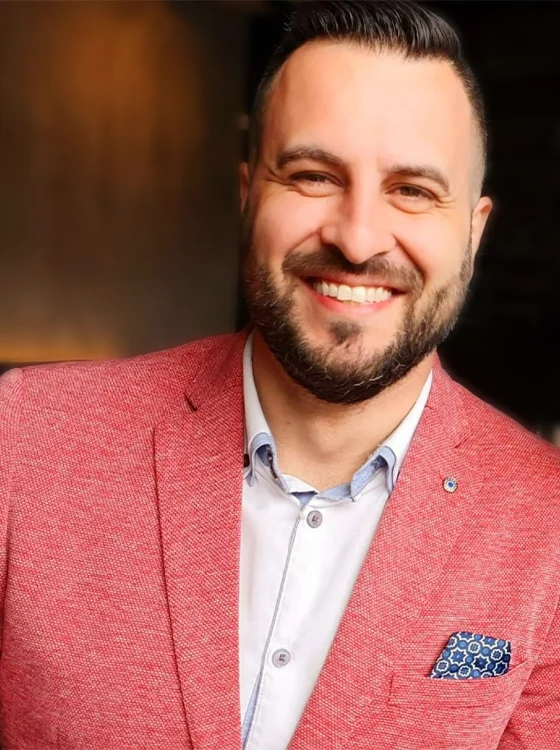
David Micallef
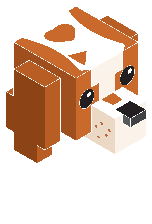
Chewy, David's cavalier king charles spaniel

Chewy. Chief of staff.

I STILL OPEN THE CASE

Most technology is designed so you never have to think about what's underneath. I've spent my life doing the opposite.

I don't trust anything I can't explain. Not out of suspicion, but because the moment you understand how something really works, you stop being at its mercy. You can fix it, bend it, improve it, or know when to walk away from it. That kind of understanding doesn't come from a manual. It comes from curiosity, a bit of stubbornness and a willingness to break things on the way.

I've also learned that every system, however technical, is really about people. Code runs for someone. Networks connect someone. Platforms exist because a person somewhere needs something to just work, and usually doesn't want to know why it does. That's the part I care about most: doing the hard, invisible work so others never have to.

We're now at a point where machines are starting to reason, and plenty of people are either afraid of that or dazzled by it. I'm neither. I'm curious, the same way I've always been. Open it up, understand it, then decide what it should be used for.

The tools change every few years. The approach never has.

Integration is a design problem

Most integration debt is a design problem that was deferred. The right architecture at the right time saves years of remediation later.

Security starts with people

The firewall was never enough. Real security is a culture, a set of habits and a genuine understanding of what you are protecting and why.

AI should reduce overhead, not create it

The value of AI in an organisation is measured by what people stop doing, not what the model can theoretically produce.

THE LOGO SPEAKS MORSE

The blue row in the logo is not just a design detail. It encodes a message in Morse code: the dash-dot-dot pattern is the letter D, and the single dash in each leg of the M is the letter M. DM, David Micallef. It has been there since the first version of the mark.

The Morse divider you see throughout this site uses the same encoding: dash dot dot for D, dash dash for M.

-.. -- (D M)

FROM TAPE DECKSTO THINKING MACHINES.

I started on a Commodore 64, opening up anything with a power cord to see how it worked. I never stopped. This is the boot log.

BOOT SEQUENCE

Late 80s to now // 19 stages

  1. Late 80s

    PRESS PLAY ON TAPE

    Commodore 64

    My parents bought it as an investment in their kids' future. Where in the World Is Carmen Sandiego? was my first taste of tangential learning: chasing a thief around the globe and picking up geography without noticing. Then I typed a bouncing ball out of a book, turned it into a little man I could steer across the screen, and saved him to cassette. I didn't just want to play it. I wanted to make it.

  2. 1993

    C:\> WIN

    The 486

    Grade 6, screwdriver out, case open on day one. XTree Gold, config.sys, then Windows 3.1, 95, 98 and 2000. Squeezing 2MB onto a 1.44MB floppy because the rules were more like suggestions.

  3. 1993 onward

    C:\> CD SIERRA

    Games that shaped me

    The Gabriel Knight and Tex Murphy series. Dark, clever, story-driven worlds that rewarded curiosity and patience, and showed me software could tell stories as well as any book or film. Still gold.

  4. 1994

    ATDT

    Getting online

    BBSes first, then the internet through OzEmail at $5 an hour peak and $2.50 off peak, so the nights got very long. 14.4, 28.8, 33.6, then stacked 56k lines for extra speed, then ADSL and beyond. BBSes, IRC, and the phone network itself, a system I wanted to understand like everything else. Those late nights shaped my DJing and music production too, all through my teens and into my twenties.

  5. 1996 to 1998

    Press DEL to enter SETUP

    Building machines

    In Year 9 I upgraded the 486 to a Cyrix 686, did work experience at Home Entertainment Center in Melton, then built my first Pentium from parts hunted down at swap meets, Voodoo 2 and all. Overclocking, tuning, chasing every last frame.

  6. 1996 to 2004

    IPX/SPX ready

    LAN party years

    From Year 9 through uni: bins full of chips, machines networked across the lounge room, chipped PlayStations and Xboxes, a few Xboxes repurposed into a mini server farm. Burning CDs and DVDs, cracking things open to see how they worked.

  7. 2000

    FORMAT C: /S

    M-Com Microsystems

    My unofficial first business: building, fixing and rebuilding PCs for friends, family and friends of friends.

  8. 2000

    NO SALE

    Behind the bar

    My first MACS wasn't the one you'd think. Two years pulling beers at the Macs Hotel in Melton taught me to read people, which turned out to be the best course in social engineering I ever took.

  9. 2002

    SELECT * FROM planner;

    First software that shipped

    At Createl Publishing I built their machines, ran their network, packed boxes and answered the phone. I also built the TPD ePlanner: a digital version of their planners in Access, distributed on CD, with a custom SQL terminal for patching. Two version updates, sold internationally across multiple years.

  10. 2004

    F:\LOGIN> LOGIN

    Australian Outback Travel

    Novell rollouts and help desk. I also drove the Maximizer CRM rollout across the sales team, my first taste of change management alongside technical delivery.

  11. 2004 to 2005

    ssh admin@nv-server

    Network Video

    Running Linux and Windows servers: Exchange, VPNs, Samba and a streaming multimedia server. But what stayed with me more than the tech was the team. My first real work tribe, people I still collaborate with today. Working closely with the marketing department here started me thinking about human-centric design and the weight that visuals carry in how people understand technology.

  12. 2005 to 2014

    show running-config

    Nine years, one school ACT I

    I started as a one-person IT department in a portable office and grew it into a team of three. I built the network from the ground up: fibre, PBX and wireless arrays at scale. More importantly, it was here that I discovered what technology can actually do in education. The right tool at the right moment changes the way a student thinks and learns, and that conviction never left. This was also the beginning of a continuous employment thread under the MACS umbrella, one that still runs today.

  13. 2005 to 2011

    make install

    Embolon Enterprises

    After hours, my first properly registered business, with my mate Domenic. A shopping cart and POS system, database software for the Australian music industry, a promo system for a record label, a welfare database for the education sector, and networks and websites for businesses across Melbourne's West.

  14. 2011 still running

    git init tyrannosoft

    Tyrannosoft

    Co-founded in Melbourne. We started with websites, networks and custom e-commerce for local businesses and kept building out the capability. Today Tyrannosoft is a web and AI studio with a growing family of product brands: VelociHost (hosting), Brontocloud (cloud), Stegoserve (compute) and an AI automation product in progress. We deliver end-to-end commerce builds, including Go Figure Collectables covering site, POS and stock management, and run a Ways of Working practice built around the Atlassian suite. Engineering technological harmony.

  15. 2014 to 2015

    deploy --zero-touch

    Consulting at Agiletec

    Across education and enterprise: zero and lite touch device deployment, App-V sequencing and delivery to support schools' BYOD journeys, web application remediation for large enterprises moving to Windows 8.1, VDI, identity and access management, and IT maturity assessments. Plus an education framework for 21st century learning and a "School in a Box" that really lived in the cloud.

  16. 2015 to 2019

    gcloud functions deploy eportal

    MACS, act one ACT II

    I co-established the Google Workspace instance and founded the integration stream under the then CDO, the same push that gave rise to architecture and data as disciplines. I built the first in-house ePortal on serverless infrastructure, a first for the business, replacing Liferay licensing and saving around $5.5M over three years. And I introduced Apigee as the API gateway.

  17. 2019 to 2020

    kubectl get pods -n risk

    ANZ

    Came in on contract doing solution design and full-stack MERN development, and was brought on full-time within months as an Engineer in Enterprise Risk. I built and ran internal risk platforms for retail, commercial and institutional banking: a centralised engine for analysing customer transactions, Kubernetes and OpenShift workloads, infrastructure as code, CI/CD and SRE practices.

  18. 2020 to now

    GET /api/schools → 300

    MACS, act two ACT III

    I came back to lead it. As Manager of Application & Integration Engineering I run the integration and API backbone I helped start, now serving around 300 schools for Australia's largest Catholic school employer. This chapter: Apigee X on GCP, Google App Integration Platform, GitOps for all API deployments, Atlassian Jira and Confluence as the engineering operating system, and a ways-of-working uplift that moved the team from ad-hoc delivery to structured, automated, observable engineering.

  19. Now

    axiom --boot

    What's next

    Autonomous AI with AXIOM, coding every day, and a home-built arcade cabinet because some things never change. Twenty-plus years of continuous employment under the MACS umbrella, from one school's IT room in 2005 to the integration platform serving 300 today. Same curiosity, bigger machines.

READY.

Same kid. Bigger machines.